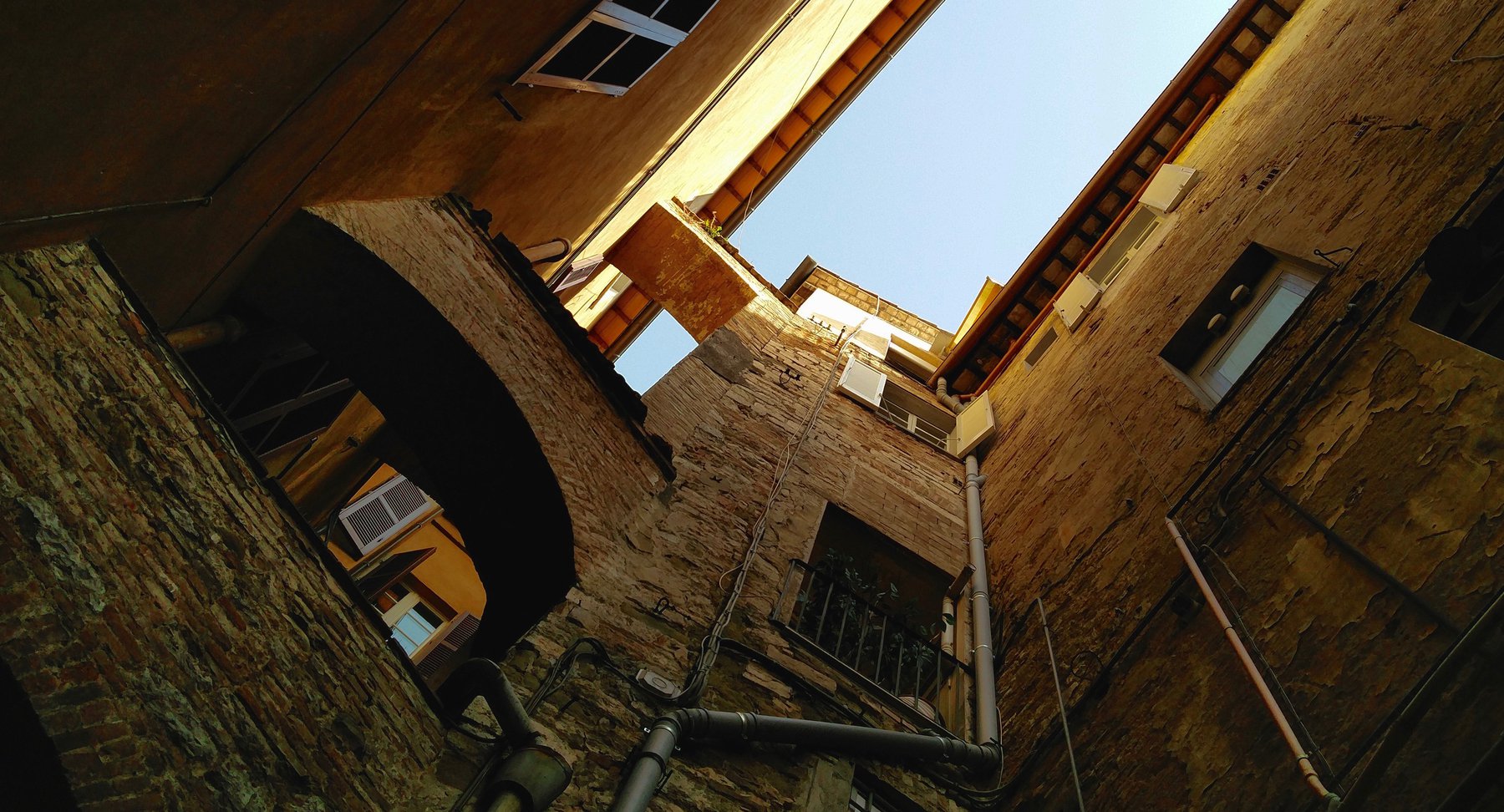
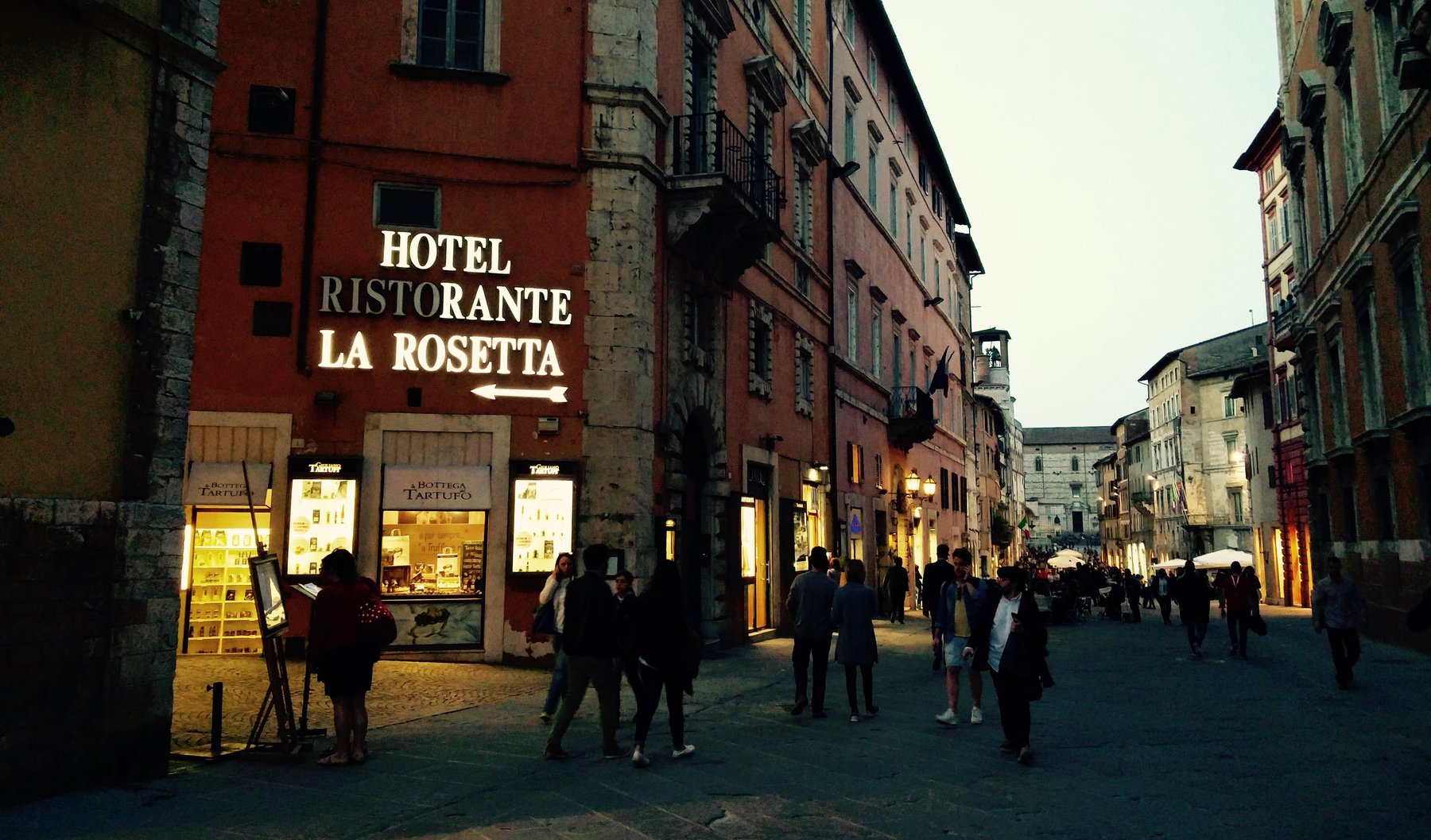
Ah, Perugia. Did I mention that I like that city a lot? I like that city a lot. And yes, the conference is a big part of my positive experience. It’s like having great potentially new friends and great old friends with the same passions all together in one small place. For me, that’s better than the NICAR experience. Here we have: Talks in rooms with windows. Great food around every corner. No ACs. A city which makes me feel excited and home and relaxed at the same time. I already can’t wait to return to that conference.
So how’s the content? I went to three talks. The second one by Daniel Drepper about “Investigative Journalism 101″ I found excellent. Objectively, it was great advice, and subjectively, I knew so little about the topic that I could not help but learn a lot.
The one panel I visited, “Does independence in journalism have a future?” took 1.5 hours and was….well, disappointing like most panels, I guess. Panels are a great idea, actually: You get a) the experience of different stakeholders in the field and therefore different opinions. And in the best case b) some new thoughts and ideas as a consequence of a vivid debate on stage, in the ultimate search for truth. Hm. Well, the theory is far, far away from reality.
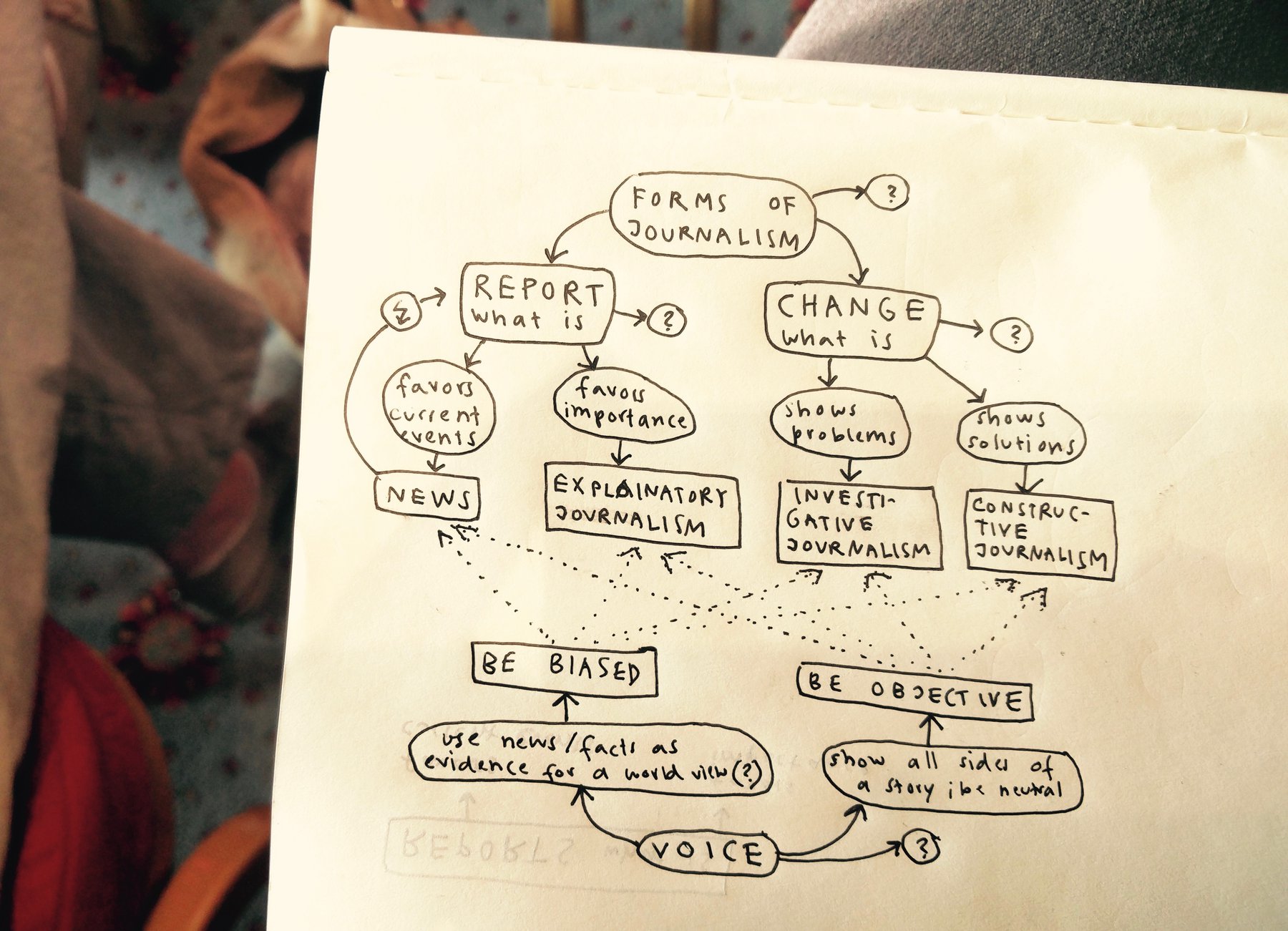
I used the time to create that long overdue model of different forms of journalism which I have read and thought a lot in the last couple of days. I posted it on Twitter as an experiment to use my followers as my panel (in search of the ultimate truth, you know). I got the great hint that “showing solutions” doesn’t imply the will to change. Good point.
Aaaaand, one of the best parts of the day, of course, was having lunch and dinner with friends from Correct!v and the Open Knowledge Foundation Germany. Ah yes. These Germans. I miss them.
Input? 7
Output? 6
Learnings?
How to find topics for investigative stories: Find and answer the unanswered questions in other news article. And ask experts in a field: “If you had a journalist at your hand, what would you want him to investigate?”
Ask yourself: What is the minimum story we can get out of that? What is the maximum story? I kind of want that idea not only for investigative stories, but for all my side projects. And my life. Setting a range is a great idea.
When you start investigating on a story, download all the stories on it you can find and read them. Write down the names that get mentioned, their professions, everything. Names are important. Names form a field. Names make decisions in a field.
Questions?
What exactly is Constructive Journalism? It seems to include a lot of ideas, like “showing solutions” and “supporting the individual in changing stuff”. Don’t these ideas need to get separated?
Is it possible to be unbiased? What does objectivity mean? What are the different ways people in journalism talk about objectivity and how does it differ what they mean by it?