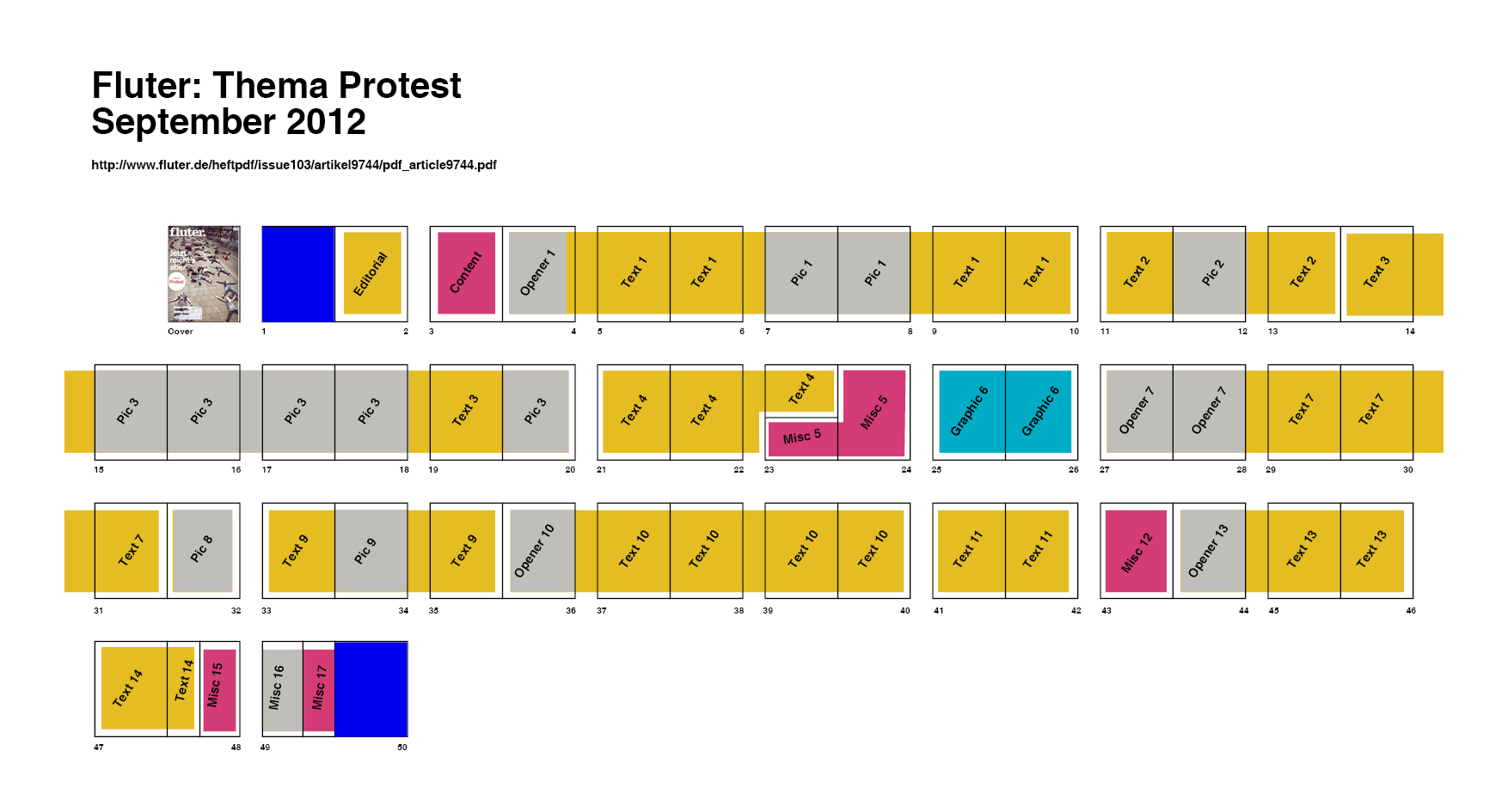
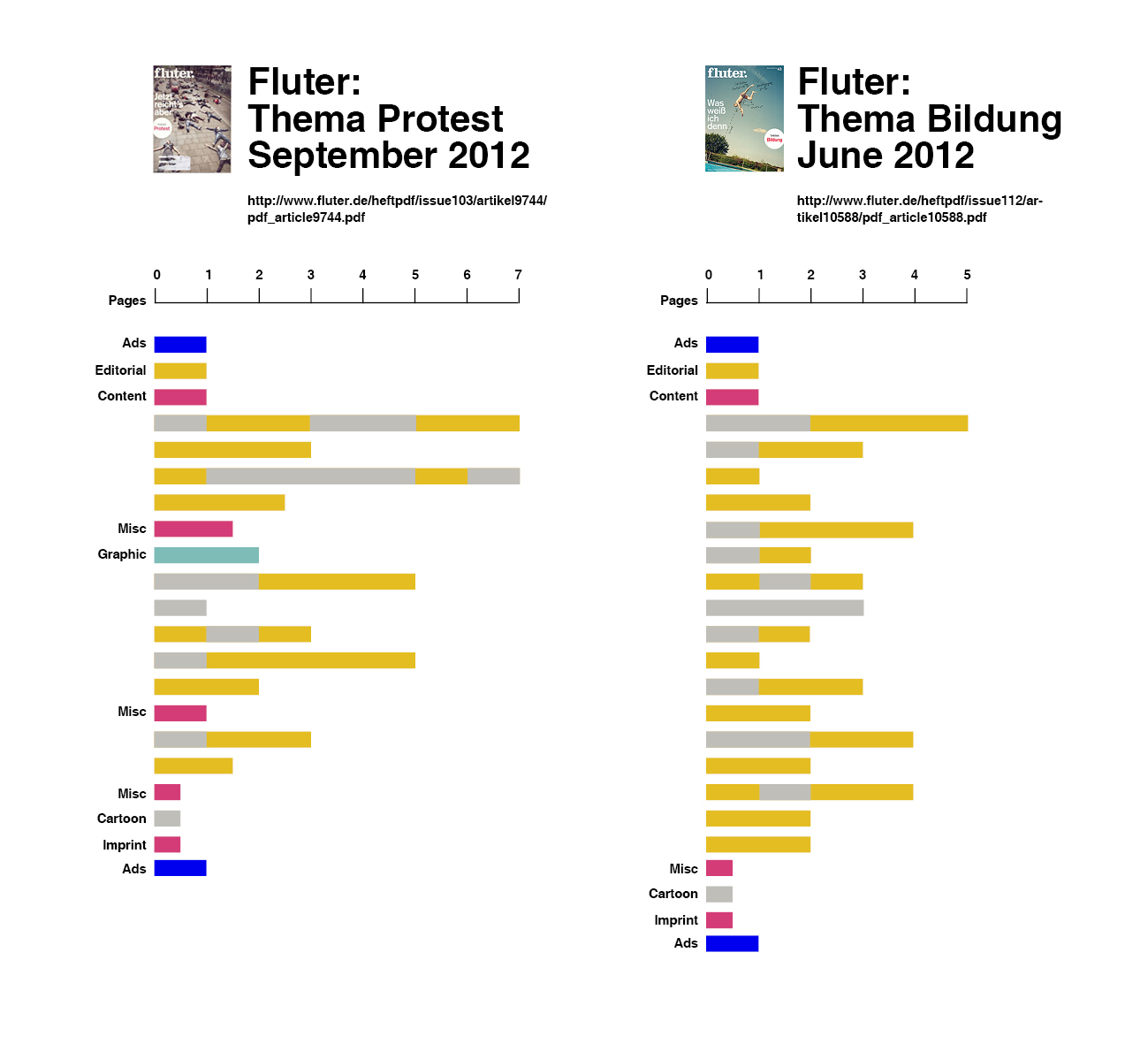
That’s the comparison of two Fluter magazines. Fluter is a german theme-based magazine.
Today I tried to get some clarity about the difference between theme-based and sector-based magazines. First I researched theme-based magazines like Dummy, theme magazine, Brand Eins, FROH!, COLORS and Slanted and had a look on the topics they’ve covered: COLORS, for example, features very strong concepts like Art, Apocalypse, Happiness, Shit, Superheros, Money, Aids, Slums or Toys. DUMMY does something similar. Brand Eins, as a theme-based magazine in a specific sector - business - covers topics like market, privacy, motivation, borders, curiosity, risk, capitalism and transparency; themes that could work somehow for articles about business-related ideas, people and companies.
My first analysis, however, was not about Brand Eins, but another german theme-based magazine: fluter. It’s a free magazine for the youth, published by the Federal Agency for Civic Education (Bundeszentrale für politische Bildung). It reminds me of the magazine “Reportagen”: both magazines string together long articles without any sections or shorter stories up front (Front of Book pages). This can be seen in my the first graphic at the top, but even better below, where each article is a bar in a bar chart. The yellow color means text, the grey refers to photos or illustrations. A grey area in the beginning of a bar is most probably an article opener. The blue bars show ads, green bars refer to information graphics and pink ones to pages with a lot of small content. For me it was interesting to see the missing ads in the Fluter, but also the homogenity - in the beginning of the magazine, the articles are a little bit longer; but afterwards you can’t see any change in the structure.
But is this a unsuccessful magazine structure? I’m not sure about that. Fluter or Reportagen could work as books of a series as well. And the other way round: If only graphics, illustrations, photos and a distinctive layout distinguishes a book from a magazine, then books like “Das Allerletzte” by Tom Ising and Marc Ritter are easily confusable with a hardcover magazine. This book is the first and only issue of a magazine.
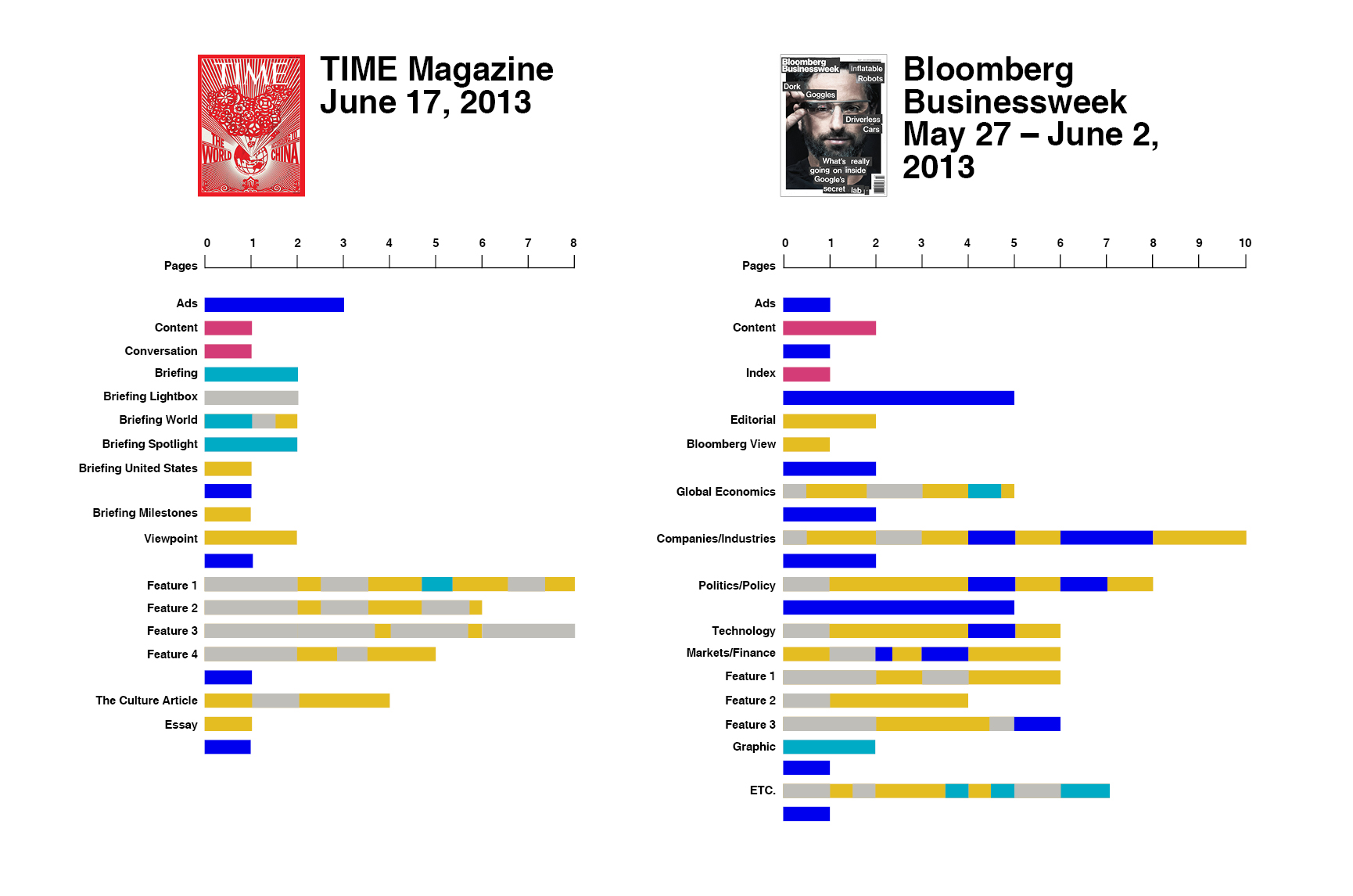
Maybe it’s just difficult to put one and only one topic into a magazine (instead of in a book). Which structure and which layout or style is so powerful that it can support so many different topics in different issues? Or maybe your magazine is allowed to be a theme-based book if it has a lot of magazine-typical elements. I think Brand Eins does a very good job at this: It has a distinctive structure, but can act freely in its theme-based part. It is, so to say, a fluter or Reportagen magazine packed into a very sorted magazine like Bloomberg Businessweek or TIME magazine.
So what did I learn today? It’s interesting for me to recognize the structure of a magazine only because of the length of articles and ads (and not because of the actual content). It’s also interesting to see the missing ads in the feature story part of the TIME magazine or how much more ads the Bloomberg Businessweek has in comparison.
ToDo: Make the same bar charts for more theme-based magazines and see where they place their ads.