

Resonate, Belgrade, day 5! Also, the last day of this conference. I’m sitting in a bad electro music concert right now, very few people are here and I thought I might use the time to write this post.
Good talks today! As good as yesterday, meaning: half of the talks were really, really good, and the rest was definitely durable. In general, I’d say, a better than average level than at other conferences.
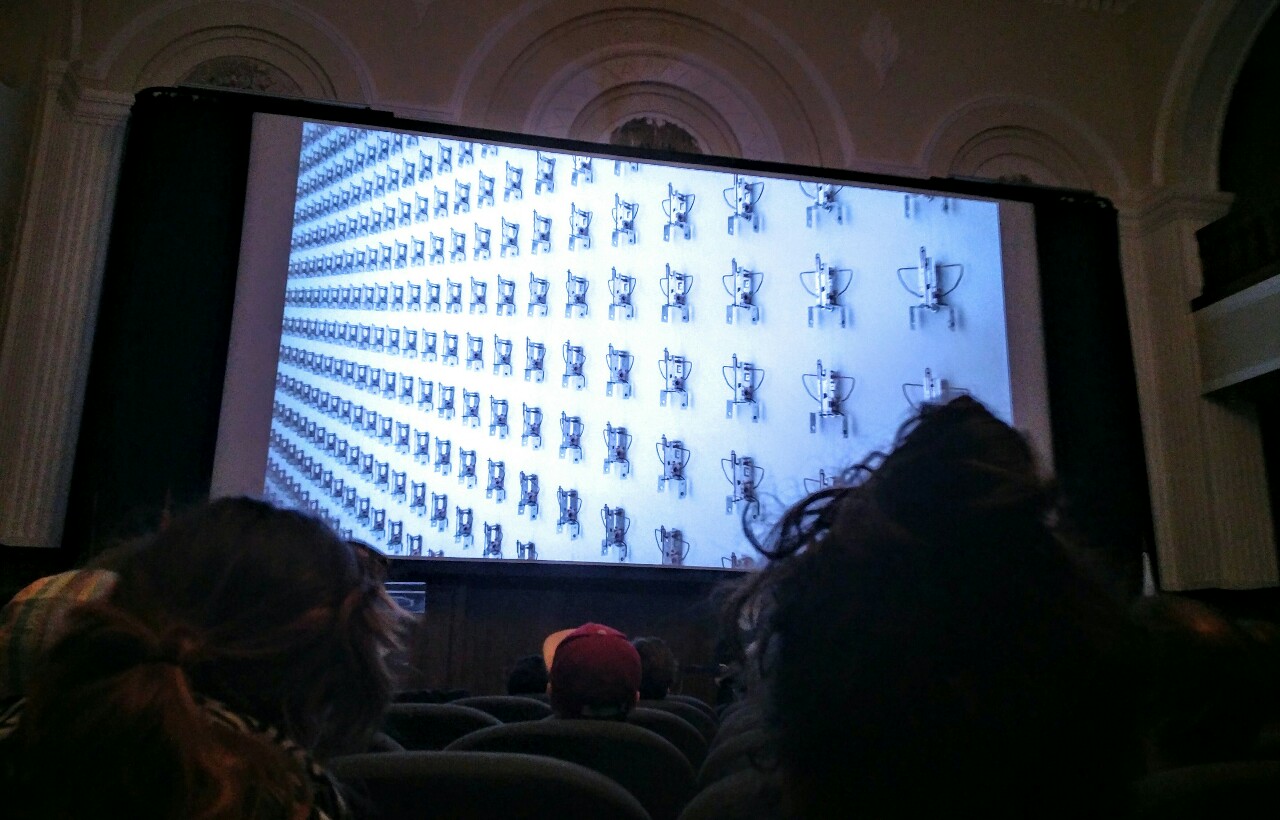
A highlight of my day (besides the talk) was having breakfast with Raphaël, having lunch with Christopher, Nicolas and Julien; understanding that the documentary about an artist I watched was totally made up (including the artist and the art work) and watching the sunset with Raphaël in a nice park.
Input? 8
Output? 3
Learnings?
Art is what you say about it. Art is what you tell about it.
If you repeat one thing hundreds of times (multiplying it), it gets different. The total is more than the sum of its parts.
People can use biographies, descriptions of people, selftracking, to compare themselves. Eg if you tell somebody “I ran 30000 miles in a year”, then they might wonder how many miles they ran. When looking at the self tracking of somebody else, you see the life of a human that you don’t live, but could live.
The tone, the voice is important for that. You don’t want to brag, you want to be humble and funny. You don’t want to say: “Most expensive food eaten last year: 500 dollar”. You want to be relatable. You want to be sympathetic, but also different enough so that people can see your life as different as theirs.
Some systems need to be complex to function. Eg offshore companies, they get more complex to disguise.
“More data doesn’t necessarily mean better representation.” Nicolas Felton
Questions ?
What is data dramatization? What is data aestheticization?
Is the most honest view of the always the least or the most beautiful/ consistent one?