

I’m in a train between New York and DC and I’m very tired and very happy. Today was the my last day in NYC and another great, great day.
It started with a tour through the Wall Street Journal newsroom, where we heard from the data team about the last stories they have covered. Interesting to hear: their team deals with data, barely with data visualisations. Their final output is often a long article and some mainstream looking bar charts. The Wall Street Journal has a quite big data visualisation team, though. I’m not used to this divide between data visualisation and data journalism; between the Visuals team and the Data desk in a newsroom. I create data visualisations because I want to tell stories with data. Isn’t that exactly what the Data desk does? I guess the difference lays in the span of the projects: Data Vis projects seem to be shorter; Data desk projects tend to fall in the category “investigative journalism” and can easily take a few months to finish. I’m not 100% sure. I will investigate on that matter. Maybe with data.
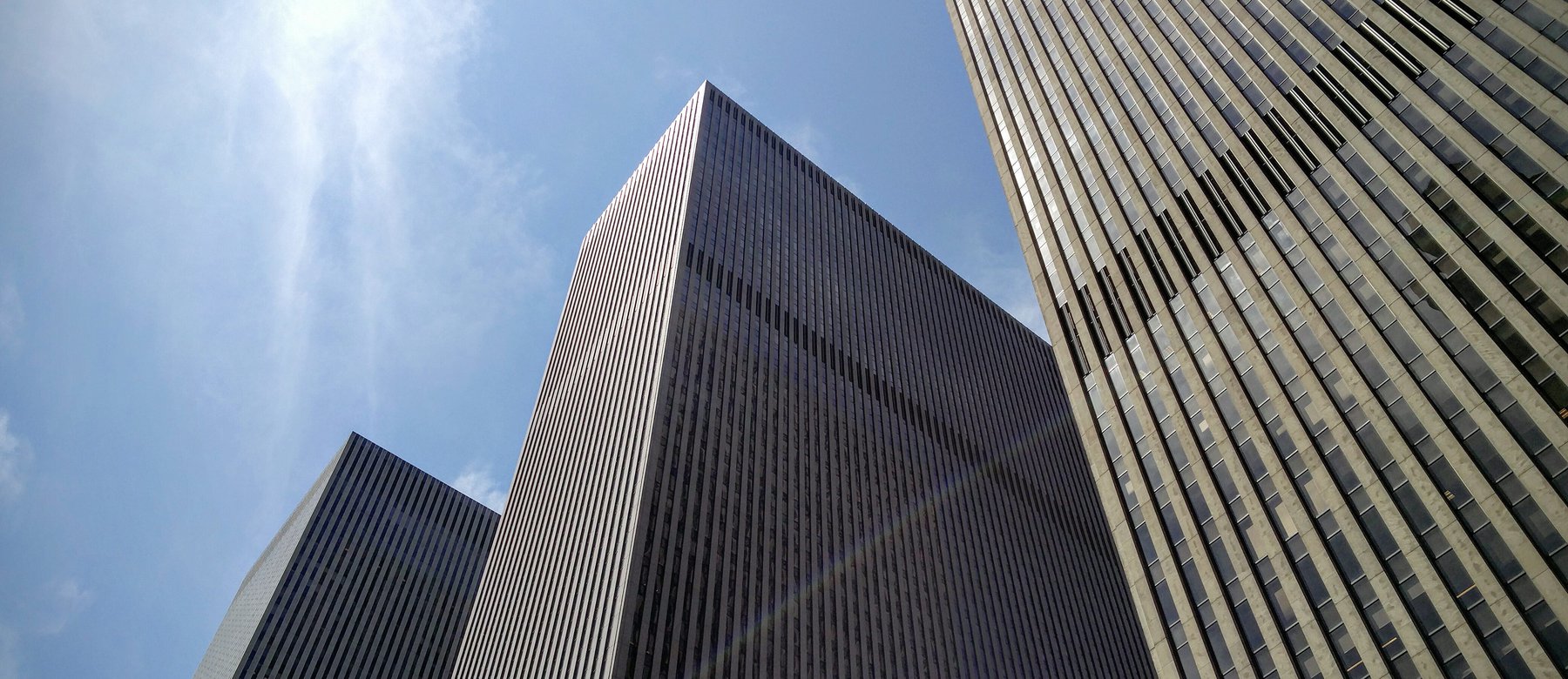
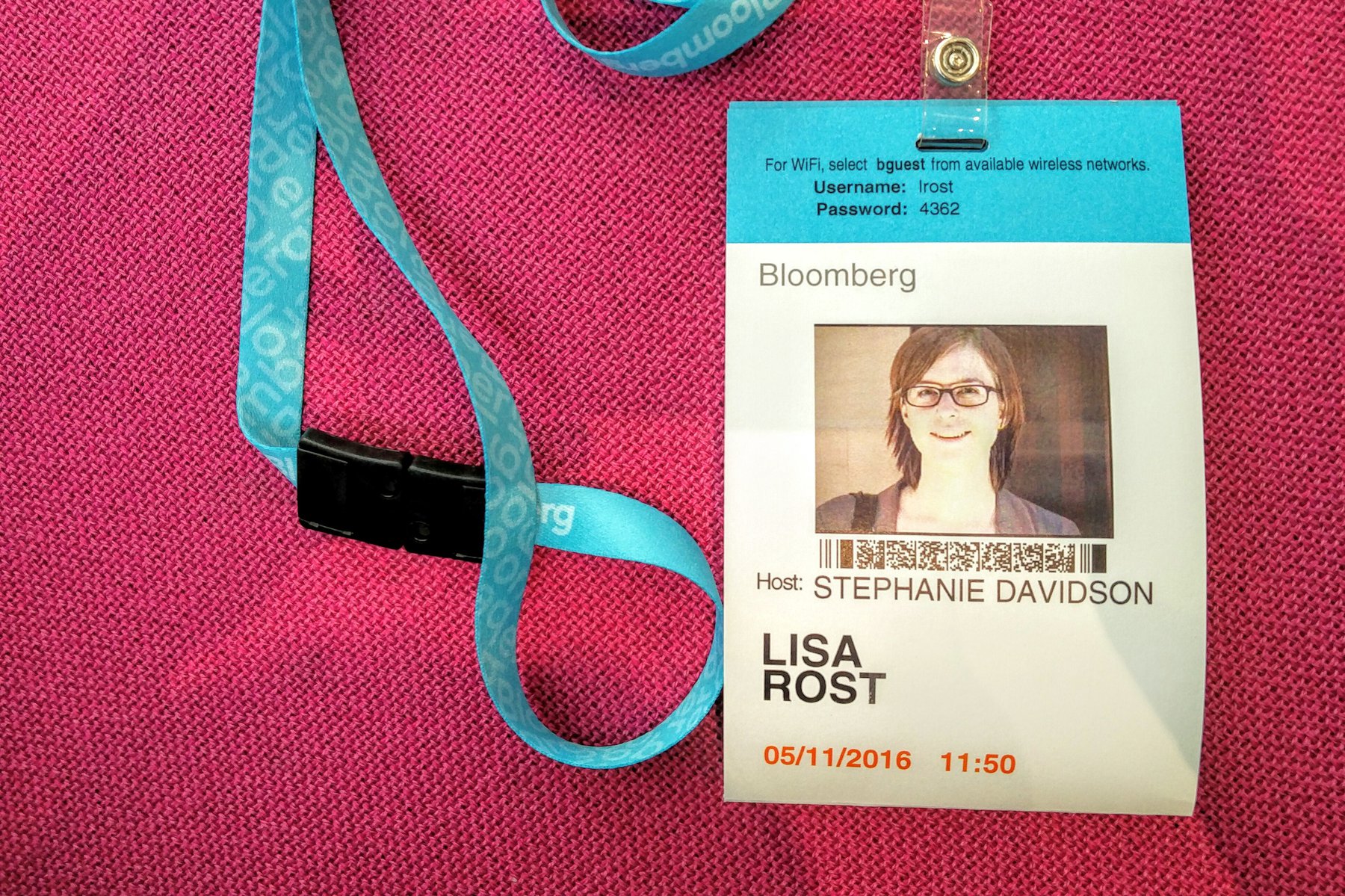
The next stop was the Bloomberg tower. It was interesting and a little bit emotional to be back in the place where my love for data visualisations began; where I learned so much during my internship exactly 3 years ago (the person on the badge is the 3 years old version of myself). I met with Toph Tucker, who started working at the Bloomberg Businessweek a few months after I left the place, and he introduced me to many Visual Data people - it was great to meet them in real life.
And my last stop: ProPublica! Like the tour through the Wall Street Journal, that visit was organized by the Global Editors Network, who also organised the Unconference yesterday. Scott Klein and Sisi Wei gave a super interesting talk about their team’s stand in the newsroom. The News App Developer team seems to have an ideal attitude: All of them are journalists, designer and coder at the same time - or at least can be. And they see themselves as a “normal” newsroom section. Meaning, they not only support the other sections with their stories, but mostly create stories themselves (which reminds me a lot of how the NYT Graphics desk acts).
I found Scott’s opinion about coding especially interesting: He said that compared with writing and designing, coding is the easiest part – and he mentioned frameworks (like Angular.js) as an explanation. I’m not sure if I agree with that. I’m 70% convinced. I still feel like coding is something that gets valued extremely high by most people I know. But the reason for that might be mostly a potential fallacy: missing understanding and therefore too high respect for the field. Since I’m also a victim of that fallacy, I can’t even judge if it IS a fallacy.
It was great to see some of the other Unconference people again today at the tours. I feel weirdly close and connected to that “community of one day”, and I really hope I see as many of them again. I feel like I learned a lot from some and could have learned a lot from all of them. People, man. Awesome.
After saying goodbye to them, I wondered around the SoHo neighborhood. It was perfect weather, the sun was shining, and I enjoyed first Joe’s 2.75 Dollar pizza and then musicians in the subway. And I got more and more jealous of everybody who works and lives in New York city. My motivation to go back to DC is mostly limited to a) sleeping in a bed again (instead of on the couch of my fellow fellows) and b) to go back to work at NPR again. Yep, I am looking forward to that. But I wouldn’t mind having the NPR Visuals Team and my bed in New York. Or Berlin. Or any other really awesome city. Ah, I’m sure it’s happening in a parallel universe.
Input? 8
Output? 2
Learnings?
I should get to know the data desk at NPR.
Try to use as little statistical tools as possible to tell the story. As the WSJ Data team puts it: “We’re mostly happy when we’re counting, because then we don’t have to explain any statistical method to the editor…or to the reader.”
To have a solution in search of a problem is not a bad thing. It’s ok to have a hammer and look for nails. Just be honest about what really is a nail (and what just looks like one because you have a hammer).
Sometimes art is great to just bring people together and have a conversation.What we consumed is replicated in what we make. We make similar things as we consume. We have one taste, and sometimes we express it through consumption, and sometimes through creation
Questions?
Should I learn statistical methods for small datasets, or should I rather learn to deal with large datasets? (Get them, organize them, analyze them)